Always Human Hospice Consulting

Hospice Growth

Everyone there is wearing three hats. Including you.

The budget does not flex. There is no room for a hire that does not work out. Your one liaison is also doing admissions paperwork, your administrator is also doing HR, and the agency across town has twelve reps and a balance sheet you are not going to out-spend.

And underneath all of it you are still trying to deliver the care you started this for — the mission you were certain was different from everyone else's.

I know what that costs. I see you.

  • Tight marketing budgets
  • Fierce competition
  • High turnover
  • Shrinking reimbursement
  • All of it

Two hundred ADC and under. On purpose.

The large consulting platforms sort buyers by census, and below a couple of hundred you become the lower tier — assigned staff, enterprise pricing, an engagement built for somebody bigger. That is the whole segment I want.

If you are the owner or operator of an agency at 200 ADC or under, watching a bigger competitor spend money you do not have, at your wits' end about growth and what to do next, and you still have a budget to respect — I am the call.

I do one thing

Hospice sales, marketing, and positioning. That is the whole list. I am not a general hospice consultancy and I will not pretend to be one, because the moment I take on your coding or your survey prep I become the same firm you have already been quoted by.

When your problem is next to mine but not mine, I bring in someone whose entire career is that thing. Named, in the room, and paid for their piece — not a junior consultant assigned off a bench you never see.

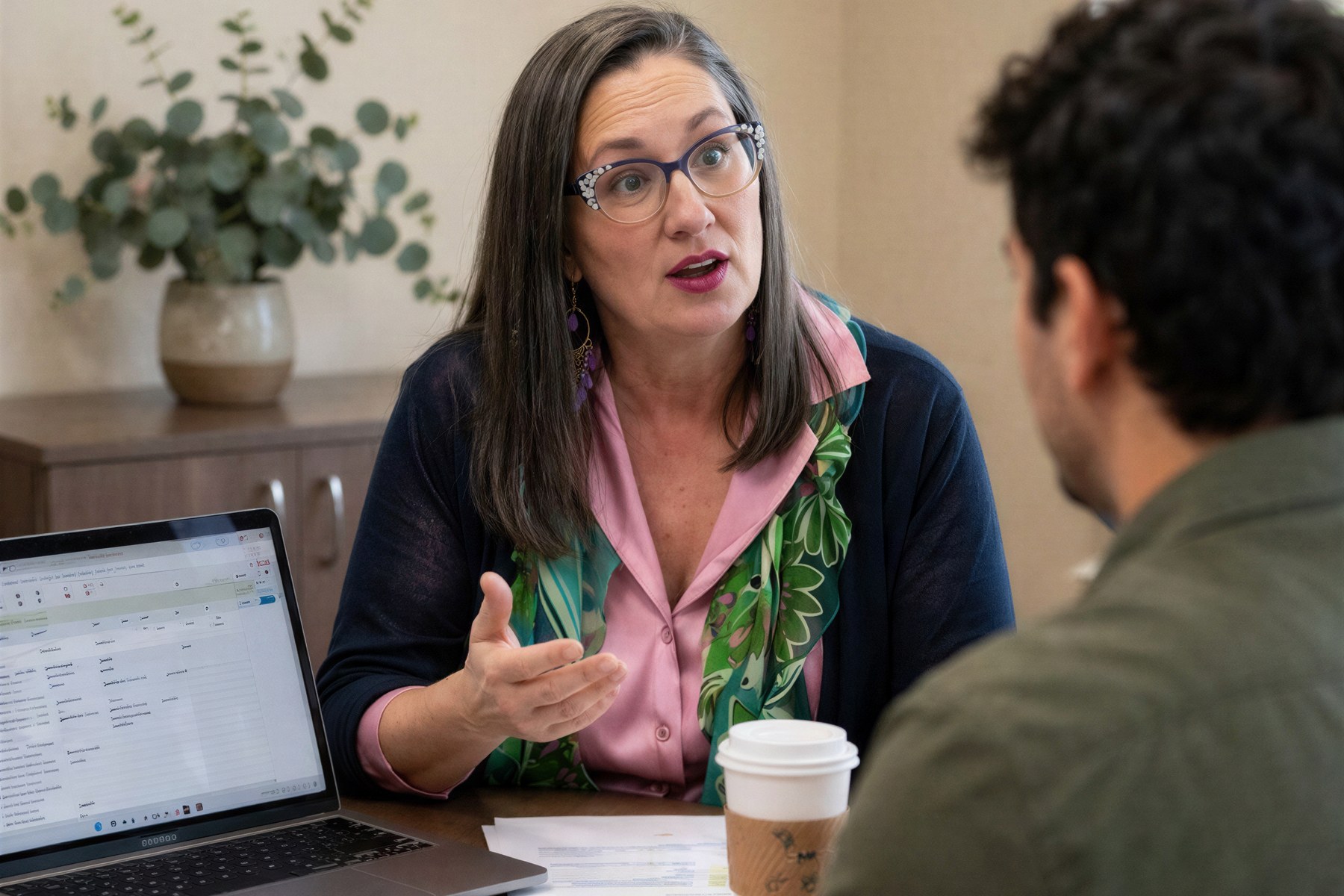
Nikki Patton mid-sentence across a desk from a colleague, papers and a laptop between them
Two hours a month, in practice

Who is actually in the room

Hospice sales, marketing & positioning

Nikki Patton · Founder & CEO

Twenty years in hospice sales, field liaison through executive leadership. Referral strategy and account mix, market positioning, and brand-to-consumer marketing — organized, handed to your team, and kept moving with a standing monthly check.

Clinical

RN, BSN, CHPN

Eligibility documentation, CAP exposure, GIP assessment and utilization, and the clinical side of length-of-stay. The reason growth here does not have to mean audit risk.

AI roadmap architecture

Specialist

What to adopt, what to skip, and what will actually connect to the systems you already run. For agencies with no IT department that are being pitched weekly.

Nonprofit and community-based agencies

Specialist

Board dynamics, philanthropy running alongside census, and the particular squeeze of a community nonprofit competing against acquisitive for-profits.

Mergers, acquisitions and enterprise value

Specialist

For owners thinking about what comes next — and for owners who want the sales function they build now to be worth something to a buyer later.

You hire one scope, not the whole firm. Your specialist is introduced by name when they are placed on your engagement — with their credentials, before any work starts.

How I learned what this job actually is

An owner-operator hired me as their VP of Sales. Sixty days in, we both saw the same thing at the same time: they did not need a local sales leader. Not part-time, not full-time, not at all.

What they needed was someone to organize the strategy and hand it to an accountability driver they already employed — their COO. Someone to check in with the new hires, get the trainings actually implemented, and keep the KPIs and the owner's own good ideas moving when nobody inside knew how to put them into motion.

They never needed a vice president of sales. They needed two hours a month to keep them on track.

They grew on that. And I stopped selling the job I used to hold.

Nobody has to be dispensable

The people and the skills that get you to an ADC of 20 are not the ones that get you to 50. Or 75. Or 120. That part is true, and most owners find it out the hard way.

Where I disagree with the industry is what follows from it. The common read is that the team who got you here will be gone when you scale — so you brace for it, and you start looking outside for the next tier of people. I have watched a lot of owners do that. They end up building alone and replacing people along the way, and paying for it twice: once in turnover, and once in everything those people knew about their market that walked out with them.

The skills have to change at every stage. The people do not.

The other option is to give the person you already have the support to level up into the next version of the job. That is slower in month one and enormously cheaper by month twelve — and it is the difference between building something with people and building it alone.

Hospice is hard work. Nobody came into this for the money. They came for the mission and they want to be good at it. Find the right people, then surround them with enough support that they can actually succeed. That is the whole job, and it is what I am for.

So the engagement is built to hand off. Not because I am in a hurry to leave, but because the goal is a team that can run this without me — which means the measure of the work is what your people can do a year from now, not how much of it I am still doing.

The main way I work

Two hours a month

Strategy organized and handed to whoever on your team is going to hold people to it — usually the COO or the administrator, not a new hire. Then a standing monthly check: how are the new reps doing, did the training actually get used, are the KPIs moving, and what did you want done last month that never got started?

Async between sessions. You are not buying my calendar — you are buying the thing that keeps the plan from dying in week three, and the coaching that gets your people ready for the stage after this one.

Before the two hours

Getting the strategy on paper

A one-time piece of work: what your sales function should actually do, who owns which part, and what gets measured. Written so the people you already employ can run it without me in the room. This is the handoff, and it is the whole point.

Fixed scope

Referral to admission

Not finding you new referral sources — converting the ones already sending. Where referrals stall between the call and the bedside, measured before and after, with the intake handoff rebuilt around what actually loses them.

With our clinical specialist

Growth that survives an audit

Hospice is the one place where selling harder can create regulatory exposure. Length of stay, live discharge, GIP, the cap. Growth strategy and clinical eligibility reviewed together, by two people — a sales specialist and an RN, BSN, CHPN — instead of in two separate firms who never speak.

How you sell to a case manager is not how you market to a daughter

These are two different jobs, and almost every hospice only does the first one.

The case manager. The social worker.

She has fifteen minutes, a discharge to move, and a supervisor who will hear about it if the placement goes badly. She needs eligibility clarity, a response time she can count on, and confidence that choosing you will not make her look bad on Monday.

She is protecting her judgment.

The daughter. 2 a.m.

She is exhausted and holding her phone in the dark, looking for something that resembles a solution. She is not evaluating your Medicare benefit. She wants to know whether her mother is going to be frightened, and whether a real person will pick up when she calls at an hour like this one.

She is looking for relief.

Same agency. Same care. Two entirely different conversations — and if you use the referral language on the daughter, she feels handled. If you use the family language on the case manager, she thinks you are soft on eligibility. Most hospice marketing never learns the second one, because the whole industry has been trained to call on buildings.

Increasingly the daughter is not even getting a list of links. She is getting an answer, assembled by a machine, from whatever it could find written about you. Most agencies have no idea what that answer says. My Harvard Business School executive education work was in AI-driven healthcare transformation, which in practice means I have spent real time on how people find, ask, and choose now that a machine sits between the question and the answer. I can build that with you, or hand your team the ability to run it themselves.

You deserve to hire someone who knows sales and marketing from inside this industry — not a marketing agency learning hospice on your budget, and not a hospice consultant who has never carried a number.

Every corner of this industry deserves people who understand the mission, the vision, and the sacred truth of how this work is actually done.

Discovery is free, and you will know the price before you commit

We looked at eighteen hospice consulting firms before writing this page. Not one of them publishes what an engagement costs. Every path ends at "schedule a call."

So here is ours. Discovery costs nothing. We talk, I look at what you actually have, and I tell you what I think is wrong — whether or not you hire anyone. If there is work worth doing, you get a written scope and a fixed fee before you decide. Not a range. Not an hourly rate that grows. The number, the deliverable, and the end date, in writing, up front.

If the honest answer is that you do not need me, that is the answer you get. It is a shorter conversation and I would rather have it now than in month three.

Where I stop

Clinical capacity. If your census is capped because you cannot staff the visits, that is real and it is not a sales problem. I will say so.

Billing, coding, and revenue cycle. Not mine. Several firms do it well.

A census guarantee. Anyone promising you a number is guessing with your money.

Why me for the sales part

I carried a bag and a territory. I ran regions and multi-state teams, where you stop carrying a number and start explaining one. And I have sat with my own family in hospice, on the receiving end of the conversation I had been having professionally for twenty years.

That last part is not a credential. It is the reason I can tell the difference between a rep who is being warm and a rep who is being useful — and why I train for the second one.

Author of Sacred Conversations. TEDx speaker. Harvard Business School Executive Education certificate in AI-Driven Healthcare Transformation. Executive doctoral coursework in business at Hult International Business School.

Free discovery. Then a number.

Thirty minutes, no deck. Tell me what your census is doing and what you have already tried. You leave with something you can act on regardless — and if there is work here, you get the scope and the fee in writing before you decide anything.

Book a conversation

You are not in this alone. I see you. I am in this with ya.

— Nikki